Wellness · Brazil
Lailá Klair
Minas Gerais · São Paulo · Rio de Janeiro
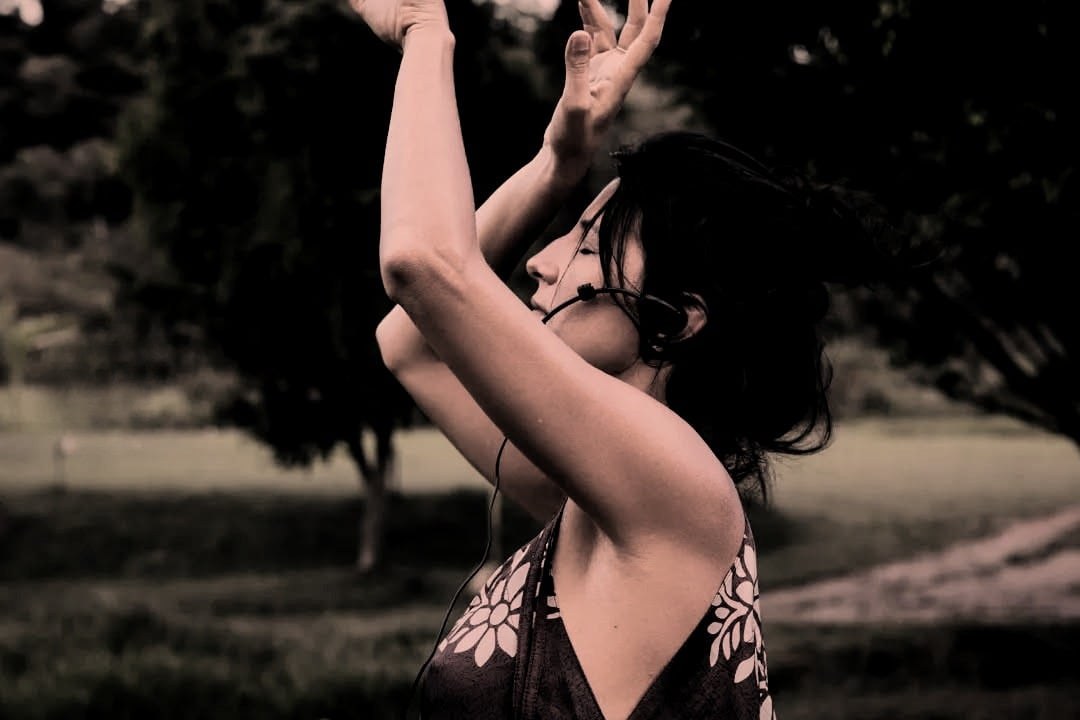
Lailá Klair is the founder of Somatic Dance for Women, where she creates spaces for women to reconnect with themselves through somatic movement, breath, and intuitive dance.
At 40, Lailá Klair is a somatic body psychotherapist and performing artist, currently pursuing postgraduate studies in Clinical Psychotraumatology.
For a decade, she has guided dance as an expression of the soul for adults across numerous original projects. She taught theatre and dance for 12 years. She has practiced as a body psychotherapist for 9 years, dedicated to investigating the relationships between body, emotion, and vitality. Since her academic training, both in her teaching degree and her bachelor's degree in Performing Arts, she had already been deeply investigating psychomotor practices at every stage of life, understanding the body as a territory of expression, memory, and transformation.
She was a columnist for “Prazer Feminino” (Feminine Pleasure) at Be Influ magazine. Her dedication to working with women was born from her own inner investigation, the blocks, fears, and psychological and physical pain she perceived in her own body, a process that led her to integrate new layers of meaning, recognizing pleasure as a vital intelligence and as an organizing force of existence. Her work sustains the reconnection with the creative capacity inherent to life, reclaiming the power to feel, create, and exist with presence.
An investigator of the poetics and potentials of the body and of mental development through dance, her teachers included Dudude Herrmann, Eduardo Fukushima, and German dancer Axel Schuwemmer.
She develops an ongoing investigation into the body as presence, understood beyond conditioned structures and systems of subjective capture. She conducted in-depth research on the concept of the Body without Organs, formulated by Antonin Artaud and later developed by philosophers Gilles Deleuze and Félix Guattari, who gave rise to schizoanalysis, an approach that understands the human being not as a fixed structure determined by the past, but as a multiplicity in constant transformation. In her work, schizoanalysis expanded the understanding of the body as a political, affective, and creative space-time, revealing desire and pleasure as a force of subjective reorganization and of producing new forms of existence, beyond social norms and patterns of repression.
For more than a decade, she has guided women through investigative processes that integrate body, emotions, pleasure, and sexuality as inseparable dimensions of psychic vitality and existential autonomy. Her work sustains the creation of new internal territories, where the body ceases to be a place of adaptation and comes to be recognized as a source of truth, potency, and freedom.
Aos 40 anos, Lailá Klair é psicoterapeuta corporal somática e artista cênica. Atualmente, é pós-graduanda em Psicotraumatologia Clínica.
Há uma década trabalha na condução da dança como expressão da alma para adultos em inúmeros projetos autorais. Lecionou teatro e dança durante 12 anos. Atua como psicoterapeuta corporal há 9 anos, dedicando-se à investigação das relações entre corpo, emoção e vitalidade. Desde sua formação acadêmica, tanto na licenciatura quanto no bacharelado em Artes Cênicas, já investigava profundamente as práticas psicomotoras em todos os estágios da vida, compreendendo o corpo como território de expressão, memória e transformação.
Foi escritora da coluna Prazer Feminino na revista Be Influ. Sua dedicação ao trabalho com mulheres nasceu de sua própria investigação interior, dos bloqueios, medos e dores psicológicas e físicas percebidos em seu próprio corpo, processo que a conduziu à integração de novas camadas de sentido, reconhecendo o prazer como uma inteligência vital e como força organizadora da existência. Seu trabalho sustenta a reconexão com a capacidade criativa inerente à vida, resgatando a potência de sentir, criar e existir com presença.
Investigadora das poéticas e dos potenciais do corpo e do desenvolvimento mental através da dança, teve como mestres Dudude Herrmann, Eduardo Fukushima e o bailarino alemão Axel Schuwemmer.
Desenvolve uma investigação contínua sobre o corpo presente, compreendido para além das estruturas condicionadas e dos sistemas de captura subjetiva. Realizou uma pesquisa aprofundada sobre o conceito de Corpo sem Órgãos, formulado por Antonin Artaud e posteriormente desenvolvido pelos filósofos Gilles Deleuze e Félix Guattari, que deram origem à esquizoanálise, uma abordagem que compreende o ser humano não como uma estrutura fixa e determinada pelo passado, mas como uma multiplicidade em constante transformação. A esquizoanálise ampliou, em seu trabalho, a compreensão do corpo como espaço-tempo político, afetivo e criativo, revelando o desejo e o prazer como força de reorganização subjetiva e de produção de novas formas de existência, para além das normativas sociais e dos padrões de repressão.
Há mais de uma década, conduz mulheres em processos investigativos que integram corpo, emoções, prazer e sexualidade como dimensões inseparáveis da vitalidade psíquica e da autonomia existencial. Seu trabalho sustenta a criação de novos territórios internos, onde o corpo deixa de ser lugar de adaptação e passa a ser reconhecido como fonte de verdade, potência e liberdade.
Mit 40 Jahren ist Lailá Klair somatische Körperpsychotherapeutin und darstellende Künstlerin. Derzeit absolviert sie ein Aufbaustudium in Klinischer Psychotraumatologie.
Seit zehn Jahren leitet sie in zahlreichen eigenen Projekten Tanz als Ausdruck der Seele für Erwachsene an. Zwölf Jahre lang unterrichtete sie Theater und Tanz. Seit neun Jahren arbeitet sie als Körperpsychotherapeutin und widmet sich der Erforschung der Beziehungen zwischen Körper, Emotion und Vitalität. Schon während ihres Studiums der Darstellenden Künste, im Lehramts- wie im Bachelorstudiengang, beschäftigte sie sich intensiv mit psychomotorischen Praktiken in allen Lebensphasen und verstand den Körper als Ort des Ausdrucks, der Erinnerung und der Verwandlung.
Sie schrieb die Kolumne „Prazer Feminino“ (Weibliche Lust) für das Magazin Be Influ. Ihre Hingabe an die Arbeit mit Frauen entstand aus ihrer eigenen inneren Erforschung: aus den Blockaden, Ängsten und den seelischen wie körperlichen Schmerzen, die sie im eigenen Körper wahrnahm. Dieser Prozess führte sie dazu, neue Bedeutungsebenen zu integrieren und Lust als vitale Intelligenz und als ordnende Kraft des Daseins zu erkennen. Ihre Arbeit stärkt die Wiederverbindung mit der schöpferischen Kraft, die dem Leben innewohnt, und holt die Fähigkeit zurück, mit Präsenz zu fühlen, zu erschaffen und da zu sein.
Als Forscherin der Poetiken und Potenziale des Körpers und der geistigen Entwicklung durch Tanz lernte sie bei Dudude Herrmann, Eduardo Fukushima und dem deutschen Tänzer Axel Schuwemmer.
Sie forscht fortlaufend zum gegenwärtigen Körper, verstanden jenseits konditionierter Strukturen und Systeme subjektiver Vereinnahmung. Eingehend beschäftigte sie sich mit dem Konzept des Körpers ohne Organe, das Antonin Artaud formulierte und die Philosophen Gilles Deleuze und Félix Guattari weiterentwickelten. Aus deren Denken ging die Schizoanalyse hervor, ein Ansatz, der den Menschen nicht als feste, von der Vergangenheit bestimmte Struktur begreift, sondern als Vielheit in ständiger Verwandlung. In ihrer Arbeit erweiterte die Schizoanalyse das Verständnis des Körpers als politischen, affektiven und schöpferischen Raum-Zeit-Ort und zeigte Begehren und Lust als Kraft der subjektiven Neuordnung und der Hervorbringung neuer Existenzweisen, jenseits gesellschaftlicher Normen und repressiver Muster.
Seit mehr als zehn Jahren begleitet sie Frauen in forschenden Prozessen, die Körper, Emotionen, Lust und Sexualität als untrennbare Dimensionen psychischer Vitalität und existenzieller Selbstbestimmung verbinden. Ihre Arbeit schafft neue innere Räume, in denen der Körper nicht länger ein Ort der Anpassung ist, sondern als Quelle von Wahrheit, Kraft und Freiheit erkannt wird.
Sessions
Somatic Dance
One-on-one · to be announced
Somatic Dance for Women
Course · to be announced